How Third-Party Logistics Providers Can Help Optimize Your Cold Chain
redmax1970
How Third-Party Logistics Providers Can Help Optimize Your Cold Chain
Welcome to Express Post Services, your trusted partner for reliable and efficient courier services in collaboration with DHL. At Express Post Services, we strive to provide top-notch shipping solutions to meet all your needs, whether you’re a small business or a large enterprise.
This content was extracted from DHL’s official website, ensuring you receive accurate and up-to-date information.
Whether you’re running a healthcare company or supplying perishable food items like fresh seafood and ice cream, timely and efficient temperature-sensitive shipping in full compliance with industry regulations is paramount.
Identifying a good 3PL provider for cold chain logistics
An effective 3PL partner understands a customer’s needs and works towards customized solutions for them. It provides a window into the logistics operations, ensuring that customers have complete supply chain visibility and the ability to manage and trace inventory remotely and securely.
3PLs appreciate the complexity of cold chain logistics and ensure that a comprehensive, innovative cold chain system is in place – one that provides real-time monitoring and tracking and various temperature-control logistics solutions to improve supply chain effectiveness.
They do this while meeting the highest industry standards by complying with the rules set by regulatory bodies like the International Air Transport Association (IATA), the U.S. Food and Drug Administration (FDA), and the European Commission.
These are important given the operational requirements of cold chain logistics.
How a cold chain works
Cold chain logistics is a catch-all term for the infrastructure used to store and transport temperature-sensitive products – mostly food and pharmaceuticals – within a specific temperature range over a prolonged period.
Cold chain logistics is complex because many nodes and parties are involved in moving chilled or frozen goods. Besides that, various products also have varying temperature requirements.
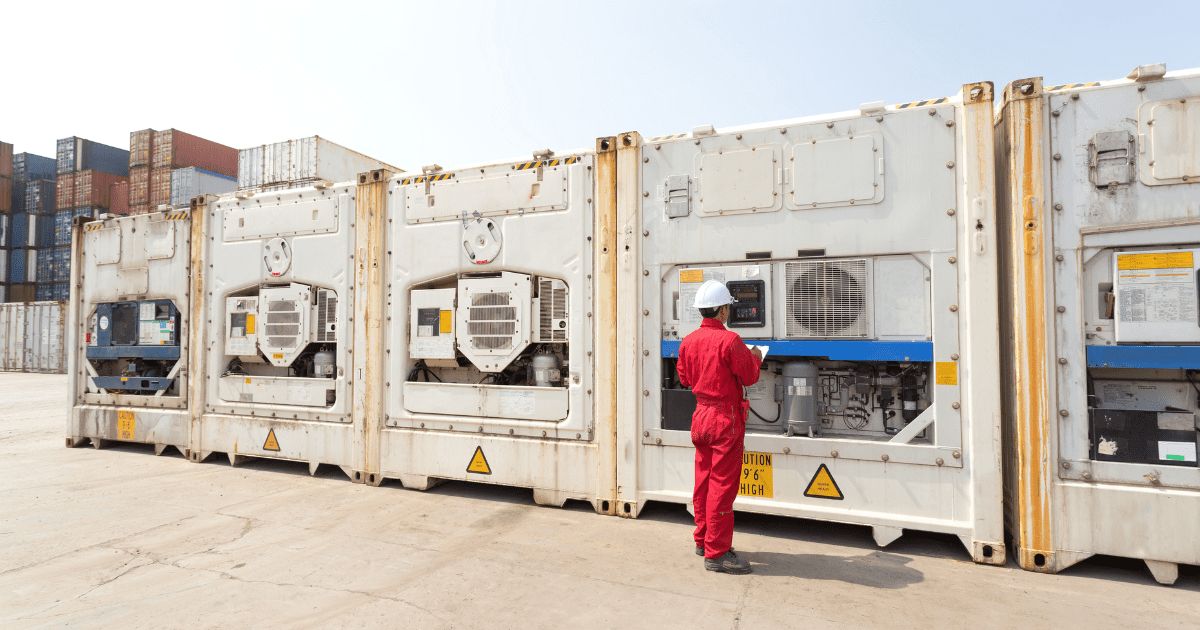
Reefers are temperature-controlled containers that help to keep perishables fresh during air and ocean freight transport.
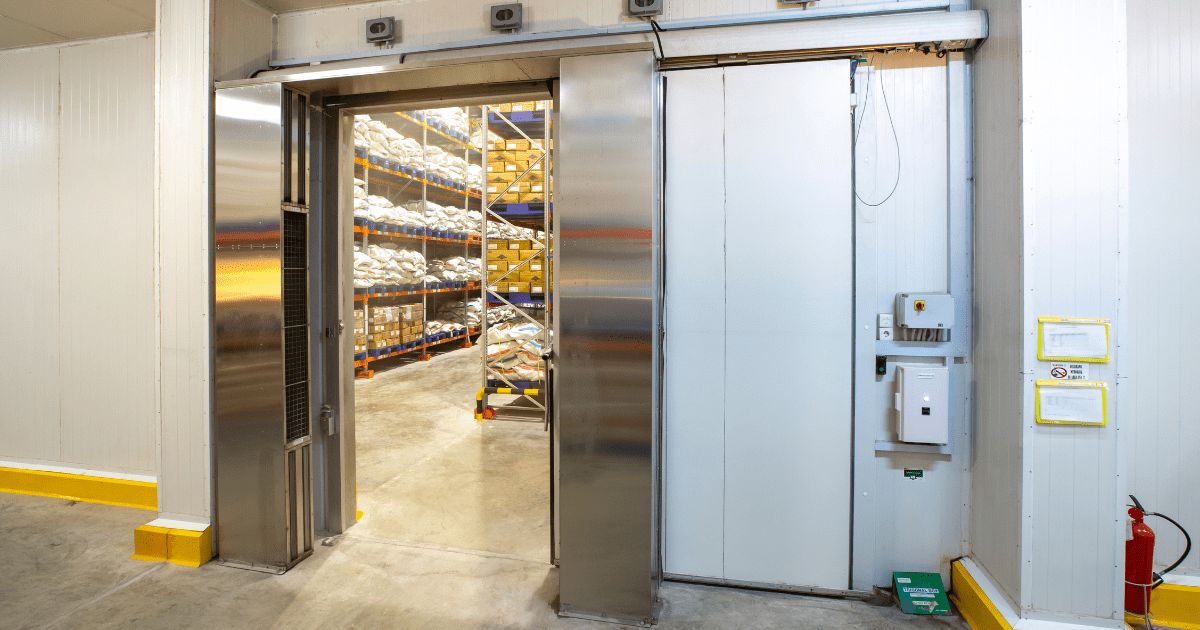
A key aspect of efficient cold chain operations is temperature-controlled storage that offers industry sector solutions. These include cold storage facilities that store goods and products that need to be transported and cooling systems that maintain the temperature of the goods at various aspects of the supply chain.
Another critical component of the cold chain supply is temperature-controlled transportation. Certain critical touch points along the supply chain are at the greatest risk of temperature deviation, for example, during the physical loading and unloading of shipments.
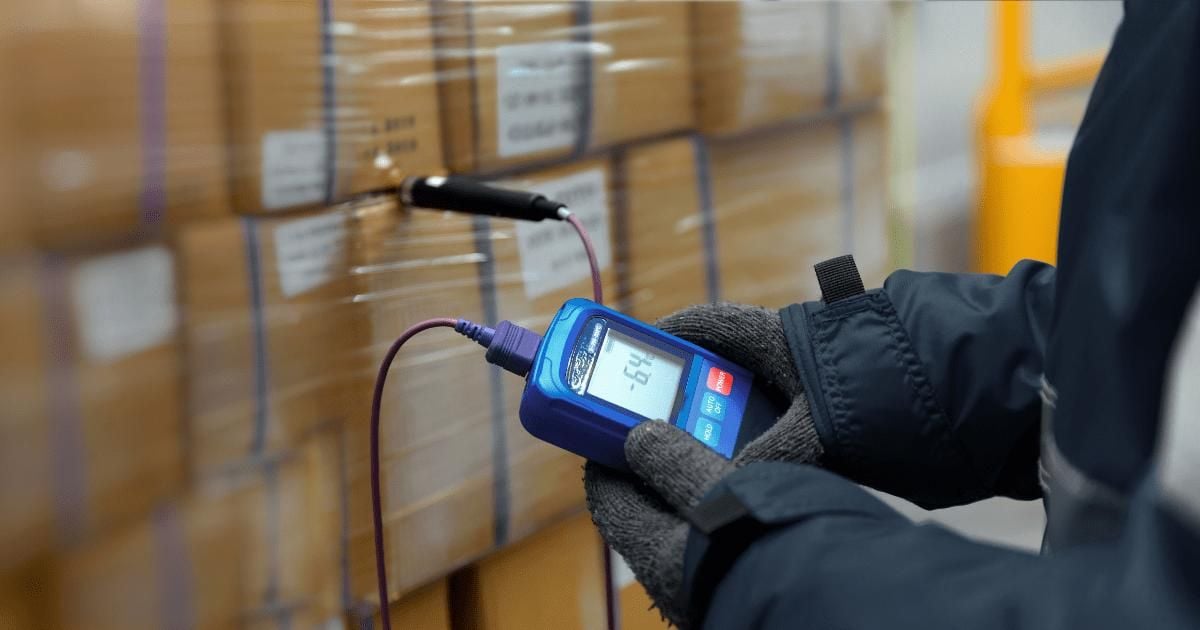
Temperature checks are conducted frequently throughout the storage and transportation process to monitor the condition of perishable goods.
To ensure that such temperature-sensitive goods are transported reliably from point to point, 3PLs utilize temperature-controlled transportation. There are several variations, such as temperature-controlled air freight and refrigerated vehicles.
What happens when a cold chain breaks
Sometimes, the unexpected occurs, and the cold chain breaks. For instance, contamination issues can arise when freezers and fridges are mismanaged or broken and become breeding grounds for germs. Inadequate packaging also exposes products to mismanaged temperatures in a trailer. In turn, damaged products hurt a company’s bottom line.
A transport breakdown is one of the worst things in cold chain logistics. When a truck stalls, temperature-sensitive products like vaccines or other perishable items can degrade quickly, resulting in lost revenue, customer dissatisfaction, and eventually a dent in the company’s reputation.
In the life sciences industry, cold chain failure can have catastrophic consequences. In the worst case, it puts patients’ lives at risk.
Keeping it cool with 3PL providers
Rather than taking on these logistical challenges, global healthcare companies, among others, have realized that 3PLs can offer several advantages.
Relieves pressure on businesses
From the process standpoint, 3PLs have the expertise in end-to-end cold chain logistics, given their global network of facilities and a team of shipping experts with years of experience in the cold chain logistics industry.
State-of-the-art temperature-controlled warehouses facilities, and reefer trucks help ensure that perishable products are kept fresh at a constant temperature.
Technologically, they are equipped with state-of-the-art temperature-monitoring facilities, warehouses, and the latest cold chain transport innovations that utilize temperature-controlled transportation. They understand that certain products require extra care and specialized handling to maintain their integrity and efficacy throughout the supply chain.
With a smart temperature-controlled supply chain, 3PLs ensure there can be no breakdown in the cold chain process, such as temperature fluctuations in the goods or transport breakdowns since these occurrences can result in contamination or degradation of the goods. When these occur, it is unwanted pressure for businesses given the possibility of reputational damage and legal liabilities, all of which remove the focus from fulfilling their core competencies.
It makes cents
A key challenge for cold chain logistics is the excessive cost of keeping the product at the right temperature to ensure it stays fresh on delivery. 3PLs overcome this by tapping into their technological expertise, such as cost-effective, cloud-based GPS-enabled sensors used in ocean, rail, and truck freight to monitor the temperature of the cargo and provide real-time visibility of the entire supply chain.
Major 3PLs also constantly innovate their cold chain packaging to cater to the delivery of temperature- and time-sensitive goods, particularly as the convenience food industry grows. This is how freshly caught king crabs from the Norwegian waters, or Atlantic salmon, can reach the plates of hungry diners halfway across the world in under 24 hours, thanks to an agile cold chain supply network. This eliminates potential issues such as inadequate cold chain packaging, and ultimately, when fewer products are spoiled, businesses find that their total costs may be lowered.
It comes as little surprise that cold chains are growing at twice the rate of other shipping. In fact, the global cold chain market is expected to grow at a compound annual growth rate (CAGR) of 12.8 percent from 2026 and reach US$910 billion(€825 billion) in 2031, primarily in response to changing consumer preferencesand an increased demand for fresh and frozen food. Consumers now expect high-quality products with longer shelf life, necessitating efficient cold chain management.
Meanwhile, outsourcing activities, particularly in the global healthcare cold chain logistics market, are projected to drive market growth. The global revenue for the healthcare cold chain logistics market is expected to exceed US$17 billion in 2023, with robust growth predicted through 2033. The pharmaceutical industry relies heavily on cold chain logistics to transport temperature-sensitive vaccines such as Covid-19 jabs, and drugs.
With so much at stake financially and reputationally, companies must deliver such products safely and efficiently. Doing so boosts customer service and satisfaction, one of the biggest competitive differentiators among businesses. Partnering with a world-class 3PL that prioritizes reliability, efficiency, and product safety could give companies an edge over their competitors because they understand that every component of the cold chain is as crucial as the other.
After all, a chain is only as strong as its weakest link.