

03
Aug
2024
Shipping To Singapore: Everything You Need To Know
Welcome to Express Post Services, your trusted partner for reliable and efficient courier services in collaboration with DHL. At Express Post Services, we strive to provide top-notch shipping solutions to meet all your needs, whether you’re a small business or a large enterprise.
This content was extracted from DHL’s official website, ensuring you receive accurate and up-to-date information.
With just a few clicks, whatever you want will soon appear on your doorstep – or so it seems.
Online shopping, already a growing trend before Covid-19 struck, surged amid pandemic lockdowns and looks set to further reshape the retail landscape. Southeast Asia, in particular, has seen an e-commerce boom.
A Momemtum Works report showed that the gross merchandise value of e-commerce in the region rose to US$99.5 billion (€90.9 billion) in 2022, a 180 percent increase from 2020.
In particular, Singapore has a huge appetite for online shopping. According to the Infocomm Media Development Authority (IMDA), the digital economy contributed over 17 percent of the country’s gross domestic product in 2022. E-commerce was one of the key sub-sectors that played a part in the four-point jump from 2017, with sales expected to reach US$14 billion by 2027.
But the seemingly straightforward order-today-get-it–by-tomorrow process may entail more steps than you originally envisioned. If you are thinking of bringing in goods for sale in Singapore’s growing online retail market, here is a quick guide to get you started.
Inside the box
Beyond how you package your items, there are multiple things to take note of when putting your shipment together.
Be in the know
For instance, importing controlled goods would require permission from various authorities such as IMDA, Singapore Civil Defence Force and National Environment Agency. This could either be in the form of an import permit or authorization form.
To check if your specific item is controlled, check the Harmonized System (HS)/CA Product Code Search Engine.
Prohibited items, on the other hand, are not allowed to be imported into Singapore. Any attempt to do so is an offense. Such goods include chewing gum, firecrackers and controlled drugs.
Getting the right documents
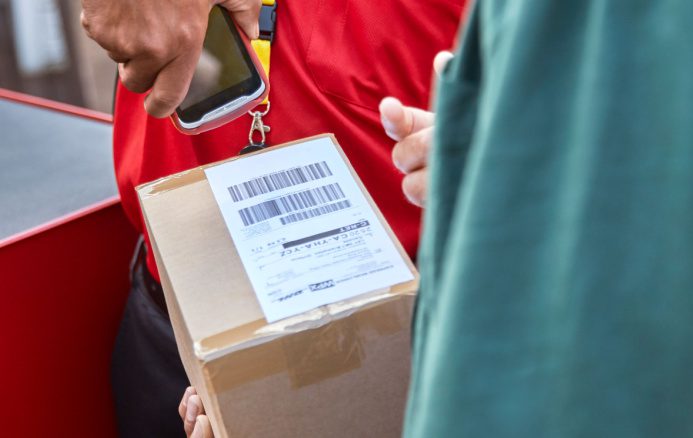
Accurate documentation – like invoices and air Declaring accurately
While you collate everything, remember to establish the customs value as well. This is also known as the Cost, Insurance and Freight (CIF) value, and can be calculated using the transaction value method where you add up all the charges related to the sale and delivery of the goods to be imported. These include selling commissions, packing costs, insurance charges, and license fees. After finalizing your shipment contents, there are still a few more steps to take before you can arrange for shipping. For starters, you must activate a customs account, which is required for the following steps. To do so, you must obtain a Unique Entity Number (UEN) by registering with the Accounting and Corporate Regulatory Authority (ACRA), or get it from a relevant UEN Issuance Agency. You can then apply for your interbank GIRO and import permits. The former must be linked to your UEN and come under one of the 47 participating banks. This is necessary to make payments of duties, taxes, penalties, and other charges to Singapore Customs during the importing process. Take note that all goods imported into the country incur the Goods and Services Tax (GST), which is 8 per cent of the CIF value. This will be raised to 9 percent from Jan 1, 2024. Intoxicating liquors, tobacco products, motor vehicles, petroleum products, and biodiesel blends are dutiable goods that will incur duty in addition to GST. You can check the specific rates on the Singapore Customs website. Lastly, all importers are required to furnish security as well. This form of guarantee is given to government agencies for your imported items. You can do so with any participating financial institutions in the eGuarantee@Gov program and through its website. More importantly, this online process cuts down on the time required to obtain the guarantee. It also saves on additional costs, such as a courier service to collect the documentation. Getting your goods into Singapore may not be rocket science. But navigating the myriad regulations with a trusted logistics partner who can guide you through and even simplify the process will be much easier. That way, you can focus on doing what you do best – sourcing, manufacturing, packaging and marketing your goods – and let your logistics partner do the rest.Outside the box
Kickstart your customs account
Permits and payment
Furnish security