
03
Aug
2024
Ai-Driven Big Data Analytics: The Next Big Thing In Supply Chain Management
Welcome to Express Post Services, your trusted partner for reliable and efficient courier services in collaboration with DHL. At Express Post Services, we strive to provide top-notch shipping solutions to meet all your needs, whether you’re a small business or a large enterprise.
This content was extracted from DHL’s official website, ensuring you receive accurate and up-to-date information.
Past, present, future

Knowing the past is critical to understanding the present and steering the future. What is true in life is true in business, and data is the raw material that makes such insight possible. Supply chain professionals have grasped the importance of data for decades, as evidenced by the industry’s embrace of the There is no end to the trend in big data analytics
We have been monitoring the trend of big data analytics in logistics and supply chains for years. The power of data-driven insights is transforming many industries, including logistics. So it was no surprise to see it again in the DHL Logistics Trend Radar 6.0 – the 2022 result of our ongoing trend research. We continue to see big data analytics as a high-impact, near-term trend. Big data analytics does no transform the supply chain physically, but it delivers greater visibility and a better foundation for sound decision-making toward strategic optimizations along supply chain segments. The result is substantially improved service levels, ranging from more efficient pallet storage in warehouses to better customer case handling. And the logistics industry already has a big head start here. Many industry leaders have begun harnessing big data to drive strategic decisions, and soon this trend will simply be standard business practice in logistics and supply chain management. “We are seeing businesses transform logistics from a quiet, backend operation to a strategic asset and value driver,” said Katja Busch, Chief Commercial Officer of DHL and Head of DHL Customer Solutions and Innovation To approach the daunting topic of AI-driven, real-time analytics of big data, with its potential to transform today’s supply chains, let us break it down into its four main types: descriptive, diagnostic, predictive, and prescriptive. Descriptive analytics is about understanding the status quo and describing what is happening, while diagnostic analytics asks why it happens. Predictive analytics forecasts what will likely happen in the future, while prescriptive analytics taps into historical and situational data to recommend strategic optimizations to be implemented. As the potential to harvest big data grows, so does the opportunity to harness it. But what does that look like in today’s supply chains? Let us look at some real-world use cases for leveraging the power of big data analytics: Want to improve efficiency in warehouses and hubs? Big data analytics delivers the supply chain visibility needed to optimize how inventory is stored and moved through facilities and how assets are utilized and maintained. Have a particularly challenging supply chain segment? Big data analytics can help you achieve cost-effective, on-time performance while ensuring your goods arrive in good condition. Want to bypass the tedious work of evaluating current or potential supplier and vendor partnerships? Big data analytics is the key to optimizing risk-and-resilience due diligence. Want to strengthen brand loyalty? Big data analytics can help you improve your customer experience and journey. “Big data harbors a treasure trove for business insights into all parts of the supply chain for a portfolio of purposes, e.g., efficiency, resilience, and sustainability,” said Klaus Dohrmann, VP Head of Innovation and Trend Research, DHL Customer Solutions & Innovation Most, if not all, logistics leaders today are harnessing big data analytics to drive strategic decisions. But even those who have taken the plunge admit there are many challenges. The three most-cited fear factors are “analysis,” “processing,” and “implementation of findings.”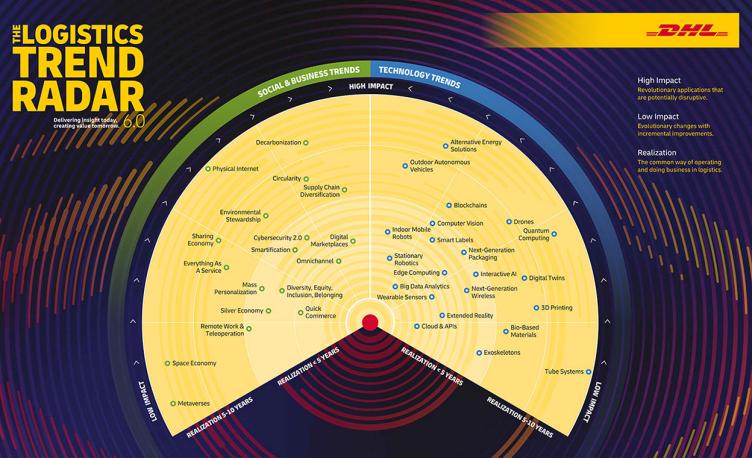
Four types of big data analytics
Supply chain analytics in action

Inventory and asset optimization
Transport and delivery optimization
Supplier risk and due diligence assessment
Customer management
The challenges of big data analytics
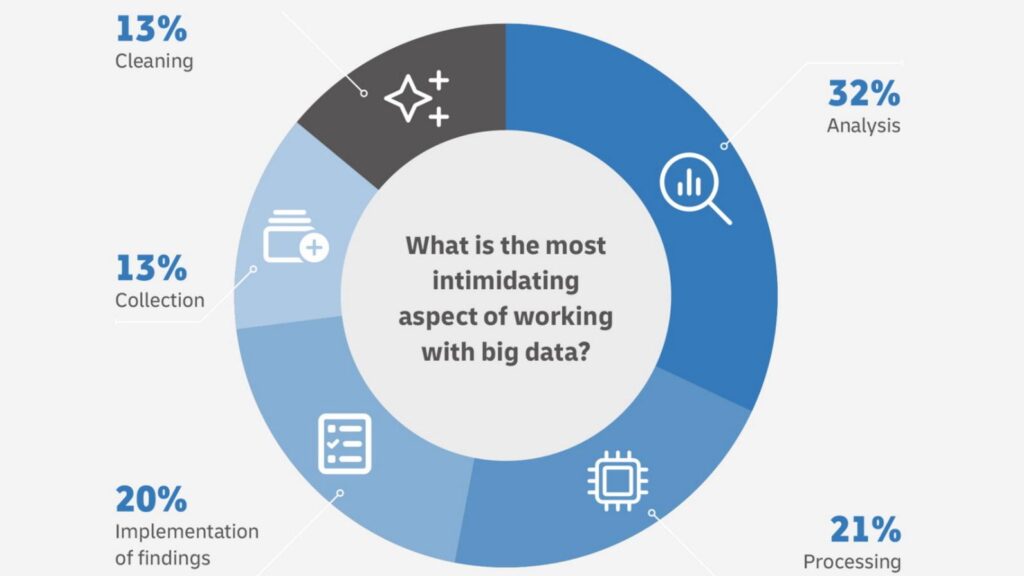
We agree that working with big data analytics can be intimidating, which is why data analysts are essential members of our supply chain management teams. From the logistics perspective, we see the following three immediate challenges:
Identifying the target
Big data analytics needs data – so before embarking on a big data analytics journey, you must identify which data types are valuable to your organization, and then build the appropriate data-collecting networks of sensors and other technologies.
Cleaning it up
Most data, especially from the internet, is unstructured and needs to be “cleaned” and filtered to achieve the quality required for meaningful analysis. Automating this process takes time, money, and talent.
Protecting your asset
Data is a valuable asset. Protecting it from bad actors requires a robust cybersecurity infrastructure.
What is the final (big data) analysis?
Visibility is the key to building resilient supply chains. With today’s AI-driven analytics capabilities, big data is poised to improve supply chain performance and boost supply chain resilience with virtually no changes to existing supply chain infrastructure. Early adopters have continually integrated the latest advances for ever-better descriptive, diagnostic, predictive, and prescriptive insights. Sooner rather than later, these big data analytics techniques will be considered standard practice in supply chain management and expected by customers across all industry sectors.
This story was first published on DHL Delivered and was republished with permission.