• Support

    expresspostservices@gmail.com

  • Company

    Express Post Services LLC

  • Phone

    +14842025420

03

Aug

2024

How India’S Gst Could Clear Inter-State Bottlenecks

By, redmax1970 DHL News Comments: no comments

Welcome to Express Post Services, your trusted partner for reliable and efficient courier services in collaboration with DHL. At Express Post Services, we strive to provide top-notch shipping solutions to meet all your needs, whether you’re a small business or a large enterprise.

This content was extracted from DHL’s official website, ensuring you receive accurate and up-to-date information.


India’s GST could bring major improvements to the country’s notoriously inefficient logistics, and radically improve supply chain management and transportation. We asked Pritam Banerjee, Senior Director, Corporate Public Policy for Deutsche Post DHL Group in South Asia, about why the GST might transform the way India trades within itself.

The announcement of the recent GST reforms is expected to rejuvenate the economy. How does India’s logistics sector benefit from these reforms?
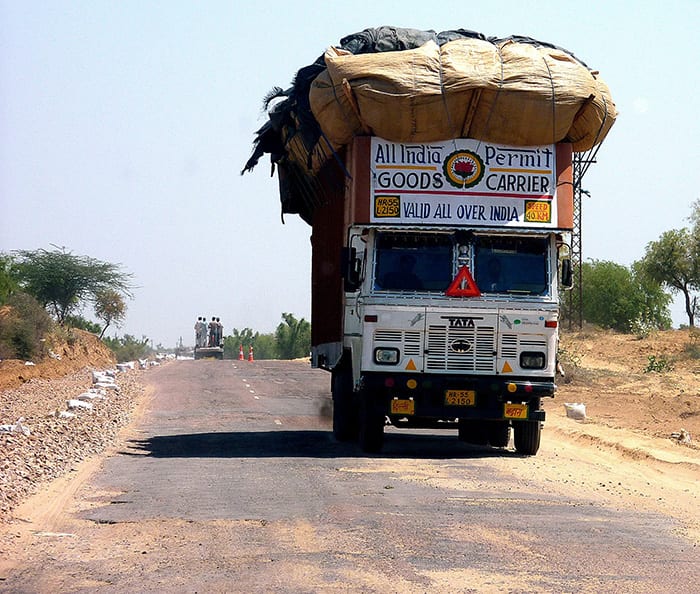
Currently, transporters moving cargo across India have to stop at state border checkposts and provide a number of Can you explain the role GST plays in changing India’s current logistics infrastructure?

The long wait lines at state border checkposts point to the real problem: an over-reliance on numerous manual checks and verification of goods.

Currently, businesses (consignors) and the receiving parties (consignees) must fill in forms provided by state governments to track the movement of goods across their borders. Transporters need to carry physical copies of these forms and invoices with them for verification at state border checkposts. Replicate this procedure across multiple states and transportation lines – it is no wonder the process gets bogged down.

The solution? Compress and streamline the process.

The introduction of GST seeks to consolidate or dissolve existing taxes and trade boundaries between states that contribute to the holdup of India’s supply chain. Without having to strictly monitor the movement of goods between state borders for taxation purposes, all forms can be compressed into one national standardised system that can be accessed online by all relevant parties. This is an IT-based solution that should be easy to use and acceptable to all parties, especially State administrators.

The GST could make clearing inter-state checkpoints a far more reliable process

What are the benefits of this national online system and how would it free up India’s clogged logistics network?

The current GST model law states that transportation can only start once the invoicing of goods is completed and all dues have been paid. Following which, the consignor and consignee can simply enter the transaction’s invoice number into this online system, which generates a transaction ID. This transaction ID lets both parties track the movement of goods, should any problems arise or if checks need to be performed.

By taking the transaction ID and combining it with the registration number of a transporting vehicle, transporters can create an electronic Speaking of officials, their presence at border checkposts have long been the means for the authorities to monitor the movement of goods. With checkposts being made redundant, how would these checks be conducted?

Of course, checks always need to be conducted by the authorities to ensure all tax laws are being followed. The solution we as an industry advocate are mobile flying squads which can conduct randomised checks at a variety of locations, therefore circumventing “chokepoints” that are usually created by static border checks.

We also need a system of check and balances to prevent this solution from being abused by officials and transporters.

For example, all stoppages by mobile squads must be logged online with valid reason from an official list of rules on why a vehicle can be stopped. Any stop that exceeds 15 minutes, that asks for information other than information present online, or that requires a physical examination of goods should also be logged, as an exception with an accompanying reason.

On top of that, any physical examination of goods should only be done under digital camera surveillance, and no more than five kilometres from where a truck was stopped. A record of this examination should be stored in a server for a maximum period of 24 hours.

This is an exciting time of change for the logistics industry. How do we go from here, and what needs to be done to ensure progress is made in the future?

Ensure that the necessary tracking platforms remain accessible anywhere and at all times. Adequate server capacity, sufficient security and a solid IT architecture are crucial to prevent a nationwide collapse of our supply lines. If we are successful in this, the GST Network will result in documentation that is simple, transparent and accessible.

We also need to consider rewarding registered transporters with a good track record. Those that have a good record of compliance could be given more trust by the authorities, motivating others to do the same. This also allows authorities to focus more on industry players who do not adhere to the rules.

Leave a Reply

Volumetric weight

Volumetric Weight Calculation Formula:

Length x Width x Height/divided into 5000